No products added!


Price range: $445.99 through $755.99
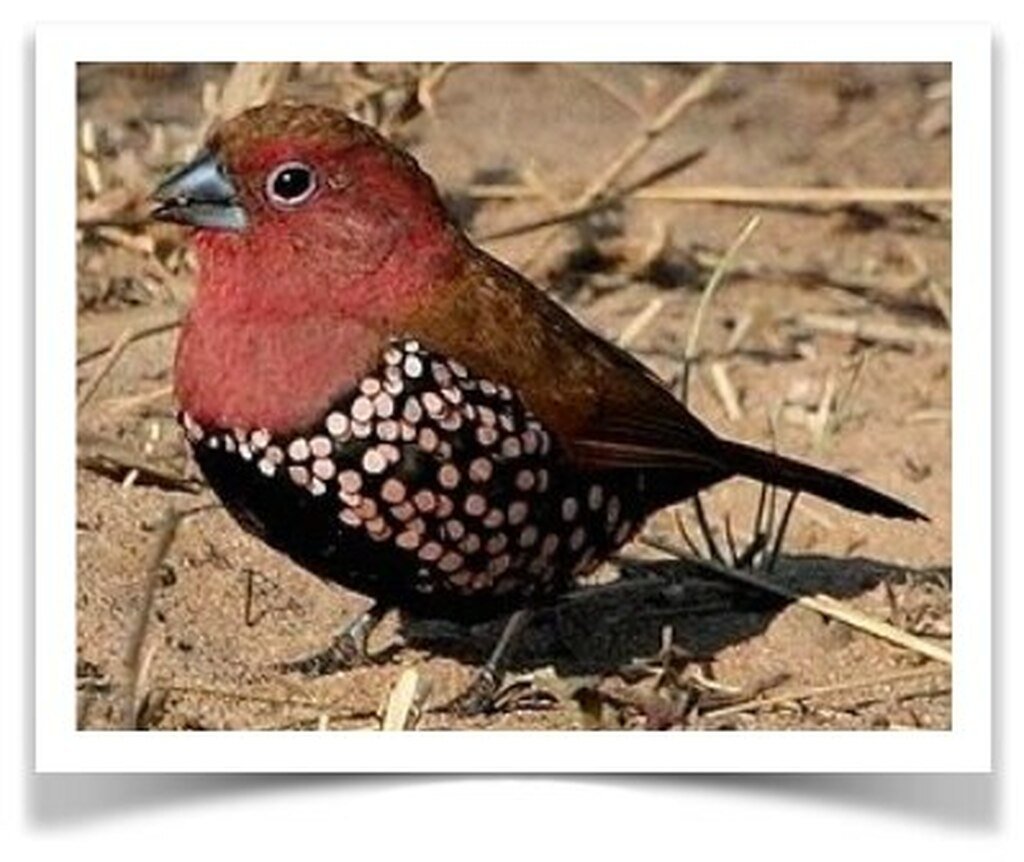
The Rosy Twinspot, also known as the Pink-throated twinspot (Hypargos margaritatus) is an estrildid finch found in the southeast African coast in Mozambique, South Africa and Swaziland. The male Rosy Twinspot has a brown crown to back, dull reddish-pink on it’s rump and uppertail-coverts, a dark brown tail edged pinkish and brown wings. His face and sides of neck to the upper breast are pink and the lower breast to it’s undertail-coverts are black. The sides of his breast and belly have large pinkish and white spots. Buy Rosy Twinspot Online
The Rosy Twinspot, also known as the Pink-throated Twinspot (Hypargos margaritatus), is a beautiful estrildid finch from southeastern Africa. It is found along the coastal regions of Mozambique, South Africa, and Eswatini (Swaziland).
At Aviora Haven, Rosy Twinspots are a beautiful choice for experienced bird keepers who appreciate colorful and active finches. They are naturally shy and spend much of their time foraging on the ground. Rosy Twinspots are usually seen in pairs or small family groups and may also associate with other peaceful waxbills.
The male Rosy Twinspot has a brown crown and back with a dull reddish-pink rump and upper tail coverts. Its wings are brown, while the tail is dark brown with pinkish edges.
The face and sides of the neck are pink and extend toward the upper breast. The lower breast and undertail coverts are black. Large pinkish-white spots can be seen on the sides of the breast and belly.
The male has a dark brown iris, a pale pinkish-blue eye ring, a blue-gray bill, and gray legs.
Females have a more subdued appearance. Their face and breast are gray, while the center of the belly and undertail coverts are pale gray. The sides of the breast and belly are black with large pinkish-white spots.
Rosy Twinspots naturally live in areas with plenty of dense vegetation. Their habitats include:
Providing plenty of cover in an aviary can help these birds feel secure.
Geography: Southeastern Africa
You can listen to the Rosy Twinspot call to become familiar with its natural vocalizations.
Song / Call: [Click to hear the Rosy Twinspot]
Size: Approximately 5 inches
Weight: Approximately 13 grams
Rosy Twinspots are easy to sex visually.
Males have stronger pink and red coloration on the face, throat, and rump. Females have more gray coloration and are generally less brightly colored.
Rosy Twinspots are generally quiet and inconspicuous birds. They spend much of their time foraging on or near the ground.
They are usually found in pairs or small family groups. They can also be seen with other waxbills.
A well-planted aviary with dense vegetation can provide useful shelter and help the birds feel comfortable. Always monitor birds when introducing them to a mixed aviary.
Rosy Twinspots build egg-shaped nests with a side entrance. The nest is made from leaf ribs, leaves, flowers, and spider webs.
The inside of the nest is lined with plant fibers or feathers. Nests are usually hidden close to the ground among dense vegetation and leaf litter.
A typical clutch contains 3–5 eggs. The incubation period is approximately 12–14 days.
For the best breeding results, provide a quiet environment with plenty of natural cover and suitable nesting materials.
A balanced diet is important for keeping Rosy Twinspots healthy. Their diet can include:
Fresh foods and appropriate supplements can also be offered as part of a varied diet.
The Rosy Twinspot is an attractive finch with beautiful pink, brown, black, and white markings. Its peaceful appearance and interesting behavior make it an appealing choice for an aviary.
At Aviora Haven, we are committed to providing bird enthusiasts with quality information about finches and other aviary birds. If you are looking for Rosy Twinspot for sale, learn more about this fascinating species and its care requirements before adding one to your collection.
If there is no gender option listed for a bird on our website, that species may be monomorphic, meaning the sex cannot be reliably determined by appearance alone.
DNA testing is available for birds that require genetic sexing. DNA testing costs an additional $149 per bird to guarantee the requested gender. Testing may add approximately 3–6 weeks or more to the estimated delivery time while the gender results are being processed.
Please see our FAQs for additional information about DNA testing, shipping, and bird availability.
| Sex | Male, Female, Pair |
|---|
Reviews
There are no reviews yet.